

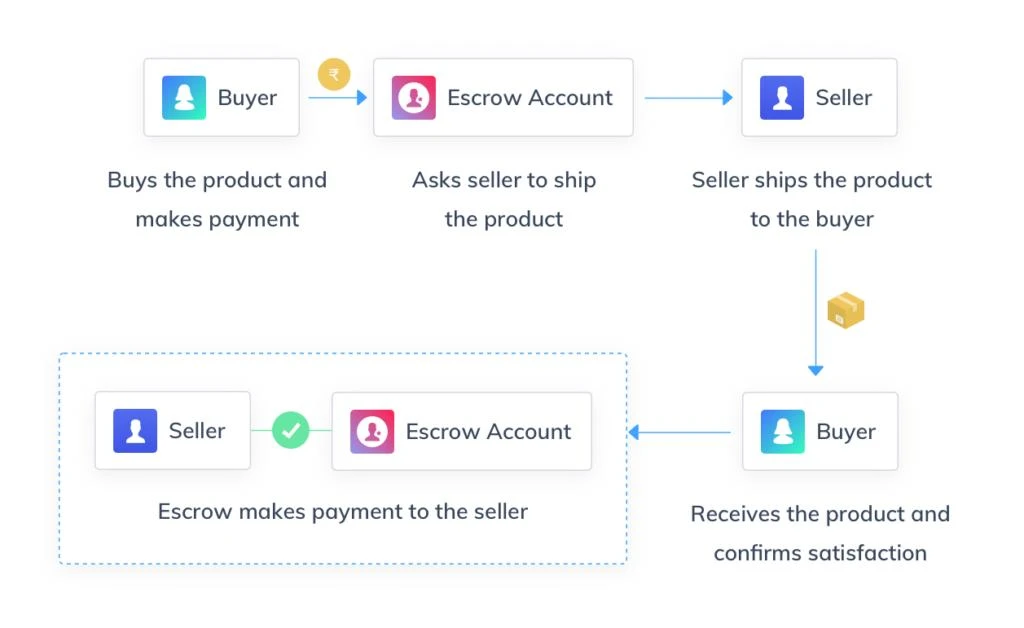
Escrow is not a logo. When you buy a Telegram channel it means a third party holds the money until a defined event: you can manage the channel as owner/admin. Pay a seller’s personal wallet and that event never has a referee.
Key takeaways
- On Dealtous, buyers pay the listed price; funds sit in escrow; the seller transfers; you confirm access; then payout (seller fee) happens.
- Confirming too early is how escrow fails — you told the platform the deal worked.
- A Discord guarantor is a person. An order status page is an audit trail.
- Card and crypto both go through the same hold-until-confirm idea; the rails differ.
Why a channel deal needs a hold
Telegram lets several people hold admin rights at once. A seller can add you, take crypto, then keep the owner role or a hidden admin. Without a hold, your only leverage is a screenshot argument in a chat that can be deleted.
Escrow creates a pause: the seller is motivated to finish transfer because they cannot get paid until you confirm. You are motivated to inspect the admin list because confirming releases their money. That is the job. Generic “buyer protection” on a game-item marketplace may not define delivery as “I am the Telegram owner.”
Full product loop: how it works. Safety context: is it safe to buy.
Dealtous escrow, step by step
- 1
Pick a verified listing
Prefer listings where the bot confirmed admin rights and stats can be live. Open the catalogue or a niche hub.
- 2
Pay the listed price
Card (Stripe) or crypto. You are not wiring the seller. Funds are held against the order.
- 3
Seller transfers
They add you with the rights you need, then the owner role. Keep communication on the order.
- 4
You inspect
Admin list, bots, linked chats, permalink. Follow the post-purchase lock-down before you click confirm.
- 5
Confirm or dispute
Confirm only when you can run the channel. If not, keep the hold and open a dispute with the order ID. See the refund policy.
Card vs crypto
Both methods are meant to land in the same escrow state. Card goes through Stripe; crypto goes through Dealtous’s submitted-proof / verification path. Do not let a seller talk you into “just USDT to this wallet, same as escrow.” It is not. The hold only exists if the payment is on the order.
How to pay is also on How it works. Fees: buyers pay the listed price; sellers pay the platform fee when a sale completes.
When you must not confirm
- You are admin but cannot add or remove other admins.
- The original owner or unknown bots still have rights.
- Subscriber or view numbers in Telegram do not match the listing in a way the seller cannot explain.
- The seller is rushing you in DMs to “confirm so I get paid tonight.”
Escrow is only as strong as your refusal to lie to it. Confirming is a legal-ish signal to the platform that delivery happened.
Escrow vs a guarantor
Account-shop culture uses a trusted middleman in Discord or Telegram. A good guarantor can work. You are still trusting a person, a chat, and an unwritten rule for leftover owner accounts. Dealtous productizes the same idea as an order with statuses, events, and a dispute path. Compare shops on Accs-Market vs Dealtous if that is your habit.
FAQs
Who pays escrow fees on Dealtous?
Buyers pay the listed channel price. The platform fee is charged to the seller when the sale completes.
Is escrow slower than paying the seller directly?
Yes, by a transfer inspection. That delay is the product. Direct pay is faster and is how most stolen-channel stories start.
What if the seller never transfers?
Funds stay held. Use the order and support — do not send extra money off-platform. Contact Dealtous.
Does escrow replace channel verification?
No. Verification says who controls the listing. Escrow says when money moves. Read why verification matters.